Poetry has been humanity’s most intimate form of expression for centuries, weaving emotions, thoughts, and experiences into beautiful verses that resonate across cultures and languages. In today’s digital age, poetry has found new life through social media captions and status updates, where brief, impactful verses can capture moments, feelings, and memories in ways that ordinary text cannot. From romantic sonnets shared between lovers to motivational quotes that inspire daily action, poetry captions has become a universal language of connection. Whether you’re looking for the perfect Caption Bangla to express your cultural heritage or seeking English verses that capture your current mood, the world of poetic captions offers endless possibilities for personal expression.
The Evolution of Poetry in Digital Spaces
The transition from traditional poetry books to digital platforms has revolutionized how we consume and create poetic content. Social media platforms like Instagram, Facebook, and Twitter have become modern poetry journals where millions share their deepest thoughts through carefully crafted verses. This shift has democratized poetry, making it accessible to people who might never have picked up a poetry collection but find themselves moved by a perfectly timed haiku or a heartfelt couplet.
Digital poetry has also introduced new forms and styles. Micro-poetry, consisting of just a few words or lines, has gained popularity due to character limits on platforms like Twitter. These condensed verses pack powerful emotional status, proving that brevity can be just as impactful as lengthy stanzas. The visual element of social media has also influenced poetic expression, with poets combining imagery and text to create more immersive experiences.
Types of Poetry Perfect for Captions
Love and Romance Poetry
Romantic poetry remains one of the most popular choices for social media captions. These verses capture the butterflies of new love, the comfort of long-term relationships, and the bittersweetness of lost romance.
“In your eyes, I found my home,
In your heart, I found my peace,
In your soul, I found myself,
And in your love, I found release.”
Motivational and Inspirational Verses
Inspirational poetry serves as daily fuel for many social media users. These verses encourage perseverance, celebrate achievements, and provide comfort during difficult times.
“Like a phoenix from the ashes,
I rise with newfound strength,
Each challenge faced and conquered
Adds wisdom to my length.”
Nature and Seasonal Poetry
Nature poetry connects us to the world around us, celebrating seasons, landscapes, and the beauty of the natural world. These verses are perfect for travel photos, sunset captures, and seasonal celebrations.
“Autumn leaves dance in the breeze,
Golden whispers on the ground,
Nature’s symphony of change
In every rustling sound.”
Friendship and Relationships
Poetry celebrating friendships and family bonds resonates deeply with audiences looking to honor their important relationships.
“Through laughter and through tears we’ve grown,
Side by side through thick and thin,
True friendship is life’s greatest gift,
A treasure found within.”
Cultural Poetry and Multilingual Captions
Cultural poetry adds depth and authenticity to social media presence, allowing users to connect with their heritage and share their cultural identity with followers. Bengali poetry, Urdu verses, Hindi shayari, and other cultural forms bring richness to caption choices. These multilingual options help preserve cultural traditions while making them accessible to younger generations who might be more comfortable with social media than traditional literature.
Cultural poetry often carries historical significance, religious themes, or traditional wisdom that transcends language barriers. Even when followers don’t understand the original language, the emotion and beauty of the verse often translate universally, creating bridges between different communities and cultures.
Crafting Original Poetry for Captions
Creating original poetry for captions requires understanding your audience, your message, and the mood you want to convey. Start with the emotion or experience you want to share, then consider the rhythm and structure that best supports your message. Free verse offers flexibility for natural expression, while traditional forms like haikus provide structure for focused thoughts.
Consider the visual element of your post when crafting poetry. A dramatic landscape might call for epic, flowing verses, while an intimate portrait might benefit from gentle, personal lines. The key is matching your poetic style to both your content and your authentic voice.
Tips for Original Poetry Creation:
- Keep a notebook of inspiring phrases and observations
- Read your verses aloud to check rhythm and flow
- Don’t force rhymes if they feel unnatural
- Let genuine emotions guide your word choices
- Practice different poetry forms to expand your toolkit
Seasonal and Occasion-Based Poetic Captions
Different seasons and occasions call for specific types of poetic expression. Spring poetry celebrates renewal and growth, summer verses capture adventure and vitality, autumn poems reflect on change and gratitude, and winter poetry embraces introspection and peace.
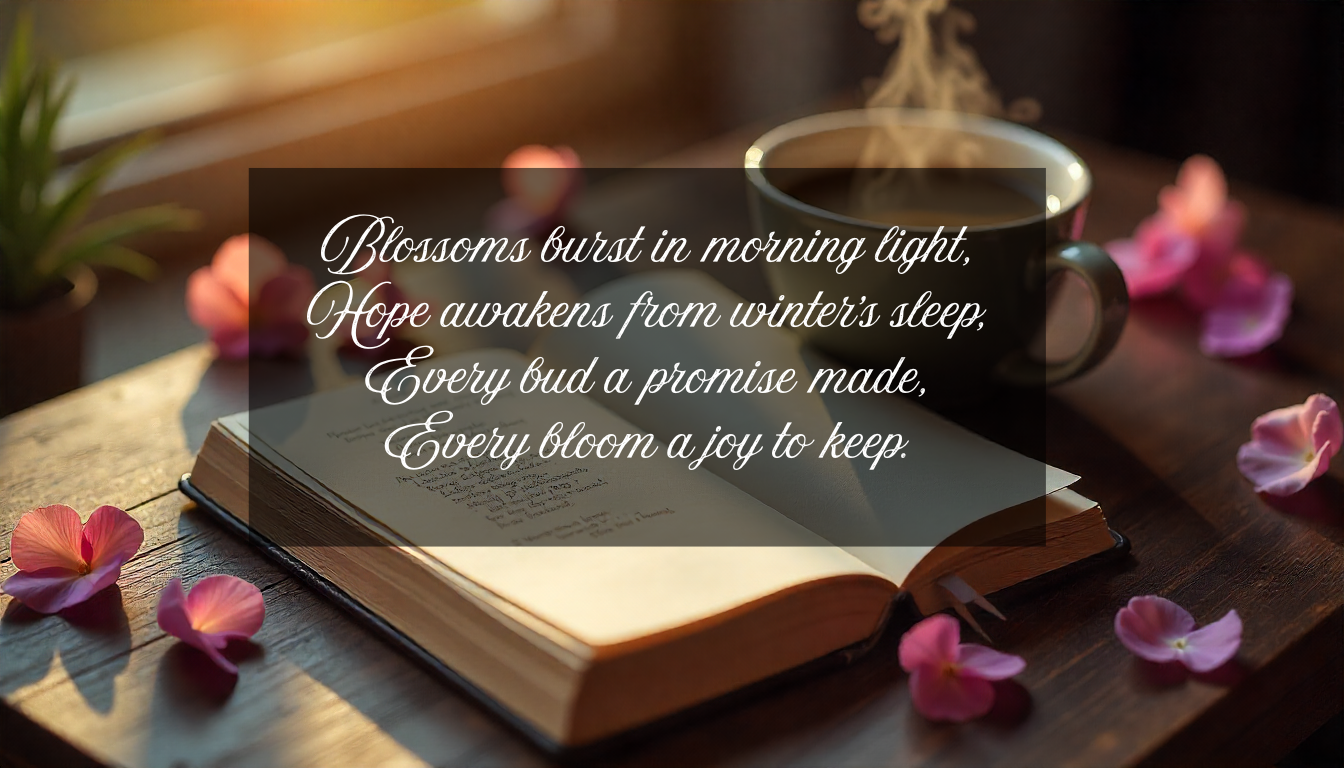
Spring Poetry Example:
“Blossoms burst in morning light,
Hope awakens from winter’s sleep,
Every bud a promise made,
Every bloom a joy to keep.”
Holiday and Celebration Verses
Special occasions deserve special poetic treatment. Birthday poems celebrate another year of life, anniversary verses honor enduring love, and holiday poetry connects us to traditions and shared experiences.
The Psychology Behind Poetic Captions
Poetic captions serves multiple psychological functions. It allows for emotional processing, helping users work through complex feelings by expressing them in beautiful, structured ways. It also creates connection, as followers often relate to the emotions and experiences expressed in poetic form.
The rhythm and structure of poetry can be soothing and meditative, providing a moment of calm in busy social media feeds. Many users report that reading and sharing poetry helps them feel more centered and connected to their inner lives.
Building Community Through Shared Poetry
Poetic captions often generate more meaningful engagement than standard text posts. They invite comments, inspire sharing, and create opportunities for deeper conversations. Many users build communities around shared appreciation for specific poets, poetry styles, or cultural traditions expressed through verse.
The comment sections of poetic posts often become spaces for creative collaboration, where followers share their own verses, offer interpretations, or request recommendations for similar content. This community building aspect transforms individual expression into collective appreciation for the art form.
Poetry Caption Best Practices
Successful poetic captions balance artistry with accessibility. Use line breaks effectively to create visual appeal and emphasize rhythm. Consider your hashtag strategy, incorporating poetry-related tags alongside content-specific ones. Timing matters too – poetic content often performs well during reflective times of day or week.
Authenticity remains crucial. Share poetry that genuinely resonates with your experience rather than choosing verses solely for their popularity. Your authentic connection to the content will come through and create more meaningful engagement with your audience.
The Future of Poetry in Digital Communication
As social media continues to evolve, poetry’s role in digital communication will likely expand. New platforms may offer features specifically designed for poetic content, such as improved formatting options or audio capabilities for spoken word. Artificial intelligence might assist in translation and cultural interpretation, making global poetry traditions more accessible.
The integration of multimedia elements – combining poetry with music, visual art, or video – will create new forms of poetic expression tailored to digital consumption. Virtual and augmented reality technologies might eventually offer immersive poetic experiences that transcend traditional text-based formats.
Frequently Asked Questions
What makes poetry effective for social media captions?
Poetry works exceptionally well for social media captions because it condenses complex emotions and experiences into memorable, shareable formats. The rhythmic structure and carefully chosen words create immediate emotional impact, making posts more engaging and likely to be remembered. Poetry also adds depth and sophistication to ordinary moments, transforming simple status updates into meaningful expressions that resonate with followers on a deeper level.
How do I choose the right type of poetry for different occasions?
Selecting appropriate poetry depends on your mood, the visual content, and your intended message. Romantic poetry works best for relationship milestones and intimate moments, while motivational verses suit achievement posts and challenging times. Nature poetry complements travel and outdoor photos, seasonal verses match time-specific content, and friendship poetry enhances posts celebrating relationships. Consider the emotional tone you want to convey and match it with corresponding poetic themes.
Can I use poetry from famous poets in my captions?
While many classic poems are in the public domain, it’s important to research copyright status before using contemporary poetry. When sharing famous verses, always provide proper attribution to respect the poet’s work. For safer usage, consider paraphrasing themes or creating original verses inspired by famous works. This approach allows you to capture similar emotions while avoiding copyright concerns and developing your own poetic voice.
What’s the difference between writing original poetry and adapting existing verses?
Original poetry allows complete creative control and authentic personal expression, ensuring your captions reflect your unique perspective and experiences. Adapting existing verses involves modifying published poetry to fit your context, which can be effective but requires careful attention to copyright and attribution. Original creation takes more time and practice but results in completely personalized content that truly represents your voice and style.
How long should poetic captions be for optimal engagement?
The ideal length varies by platform and audience, but generally, shorter poems work better for social media consumption. Instagram captions can accommodate longer verses, while Twitter’s character limits favor micro-poetry or brief stanzas. Focus on quality over quantity – a powerful four-line verse often generates more engagement than a lengthy poem that might lose readers’ attention in busy social feeds.
Should I use traditional poetry forms or free verse for captions?
Both traditional forms and free verse have their place in social media poetry. Traditional forms like haikus, sonnets, or couplets provide familiar structure that many readers find appealing and easy to follow. Free verse offers more flexibility for natural expression and contemporary themes. Experiment with both approaches to discover what feels most authentic to your voice and resonates best with your audience.
How can I make my poetic captions more visually appealing?
Use line breaks strategically to create visual rhythm and emphasize important phrases. Consider the overall appearance of your text block – shorter lines often look more elegant on mobile screens. Incorporate spacing between stanzas for easier reading, and align your text formatting with your image composition. Some users enhance visual appeal by using special characters or emojis sparingly, though the poetry itself should remain the focus.
What are common mistakes to avoid when writing poetry for captions?
Avoid forcing rhymes that sound unnatural or compromise meaning for the sake of structure. Don’t use overly complex vocabulary that might alienate your audience, and resist the temptation to be deliberately obscure. Poor grammar and spelling mistakes can detract from even beautiful verses, so always proofread carefully. Additionally, avoid copying others’ work without attribution or using poetry that doesn’t genuinely reflect your experience or emotions.
How do I develop confidence in sharing original poetry on social media?
Start by sharing poems with close friends or family to build confidence before posting publicly. Practice regularly by writing short verses about daily experiences, gradually developing your unique style and voice. Remember that perfection isn’t the goal – authenticity and genuine emotion resonate more than technical perfection. Engage with poetry communities online for support and inspiration, and view each post as a learning opportunity rather than a performance.
Can multilingual poetry be effective even if followers don’t understand the language?
Multilingual poetry can be incredibly effective because emotion and rhythm often transcend language barriers. Many followers appreciate exposure to different cultures and languages, even without understanding every word. Consider providing translations or brief explanations for context while preserving the original verse’s beauty. This approach helps preserve cultural heritage while making your content accessible to diverse audiences, often generating meaningful conversations about language and culture.
Conclusion
Poetry’s enduring appeal in caption culture demonstrates humanity’s fundamental need for beautiful, meaningful expression. Whether drawing from classical traditions, contemporary voices, or original creations, poetic captions offer a way to elevate ordinary moments into extraordinary memories. They provide comfort, inspiration, connection, and beauty in our daily digital interactions.
The key to successful poetic captions lies in matching verse to moment, emotion to expression, and authenticity to artistry. As you explore the vast world of poetic possibilities for your captions, remember that the most powerful verses are those that speak truthfully to your experience and resonate genuinely with your community. Through poetry, we transform simple status updates into windows to the soul, creating lasting connections and preserving precious moments in verses that echo long after the scroll has passed.