
The 1998 World Cup in France marked a turning point for football fans worldwide. One of the most fascinating stories was Croatia’s bronze medal run, a feat still remembered today. For many Vietnamese supporters watching through free livestreams on Xoi Lac TV, the journey of that young squad remains a remarkable chapter of world football.
From Yugoslavia’s Breakup to a New National Team
The creation of Croatia’s national team was directly tied to the political turmoil of the early 1990s. When Yugoslavia dissolved, its players were split into several new nations. Croatia, with a proud football culture, quickly worked to establish a competitive side.
The story behind the creation of Croatia’s football team
The fall of Yugoslavia and birth of Croatian football
For decades, Croatian stars like Zvonimir Boban and Davor Šuker had represented Yugoslavia. After independence, the Croatian Football Federation gained recognition from FIFA in 1992. This allowed the country to compete as a new identity on the international stage. It was a rapid transition, and many players were suddenly representing a brand-new flag.
Early challenges in forming a competitive squad
Building a team from scratch came with problems. There was no deep system of preparation, and resources were limited compared to long-established national teams. Many players were spread across European leagues, which created both opportunities and logistical challenges. Still, a strong generation of footballers gave Croatia a base to dream of success.
The role of political and cultural identity in shaping the team
The squad carried more than sporting ambition. Representing Croatia meant proving national strength and unity after years of conflict. Every match was tied to national pride. That mix of talent and motivation created an extraordinary team spirit, which became one of the keys to their performance in France.
Learn more: Cakhia TV Soccer Live Scores, Latest Soccer Results
The 1998 World Cup Journey in France
Croatia arrived at the tournament with little expectation from outsiders. This was their first World Cup, and most analysts saw them as underdogs. Yet the team showed discipline, tactical intelligence, and deadly finishing power.
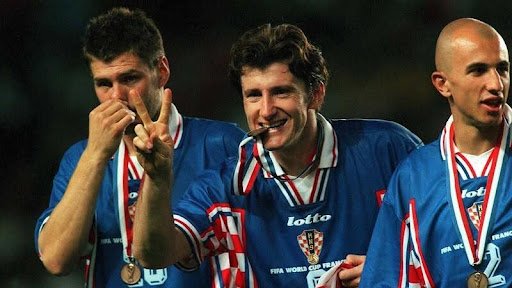
The unexpected run of Croatia at the 1998 World Cup
Group stage battles and proving their strength
Placed in a group with Argentina, Jamaica, and Japan, Croatia secured early wins against Jamaica and Japan. These victories ensured a place in the knockout stage. Even though they lost to Argentina, their solid defensive structure and Šuker’s sharp finishing gained international attention.
Quarter-final victory that shocked the world
The round of 16 saw Croatia face Romania, and Šuker’s penalty sealed progress. Then came the quarter-final against Germany, a powerhouse of world football. Few gave Croatia a chance, but they delivered a stunning 3–0 win. Goals from Jarni, Vlaović, and Šuker left the world in shock. That night in Lyon became one of the most famous moments in the country’s sporting history.
Facing hosts France and the heartbreak in the semi-final
In the semi-final, Croatia went head-to-head with France, the tournament hosts. The match was intense and filled with drama. Early in the second half, Šuker scored to put Croatia ahead. However, two quick goals from Lilian Thuram turned the game around. Croatia fought bravely but fell short. The dream of reaching the final ended, but the team had already earned respect.
Heroes Who Defined Croatia’s Bronze Success
The bronze medal was not only about tactics but also about individuals who rose to the occasion. These players gave Croatia the identity of a strong football nation.
Davor Šuker’s Golden Boot and his clinical finishing
Šuker finished as the top scorer of the 1998 World Cup with six goals. His instinct inside the penalty area was unmatched. Every chance he had turned into a serious threat. Beyond numbers, his confidence inspired teammates to believe they could beat anyone.
Zvonimir Boban as captain and midfield architect
Boban, the team’s captain, controlled the tempo of matches. His ability to connect defense with attack was crucial. He combined vision with leadership, guiding younger players through high-pressure situations. Boban was also a symbol of Croatian independence, having famously stood for his beliefs even before the breakup of Yugoslavia.
A defense led by Slaven Bilić and strong team unity
Croatia’s defense was organized and tough. Slaven Bilić and Igor Tudor brought physical strength and resilience. The backline limited chances for opponents and gave the midfield confidence to move forward. The unity across all positions showed that Croatia was more than a collection of individuals. It was a true team.
Conclusion
Croatia’s bronze medal in 1998 was more than a football result. It was proof that a newly formed nation could stand tall on the world stage. For fans watching through platforms like Xoilac, the story remains unforgettable. That squad turned history, politics, and passion into a performance that shaped Croatia’s football identity for generations.